Description
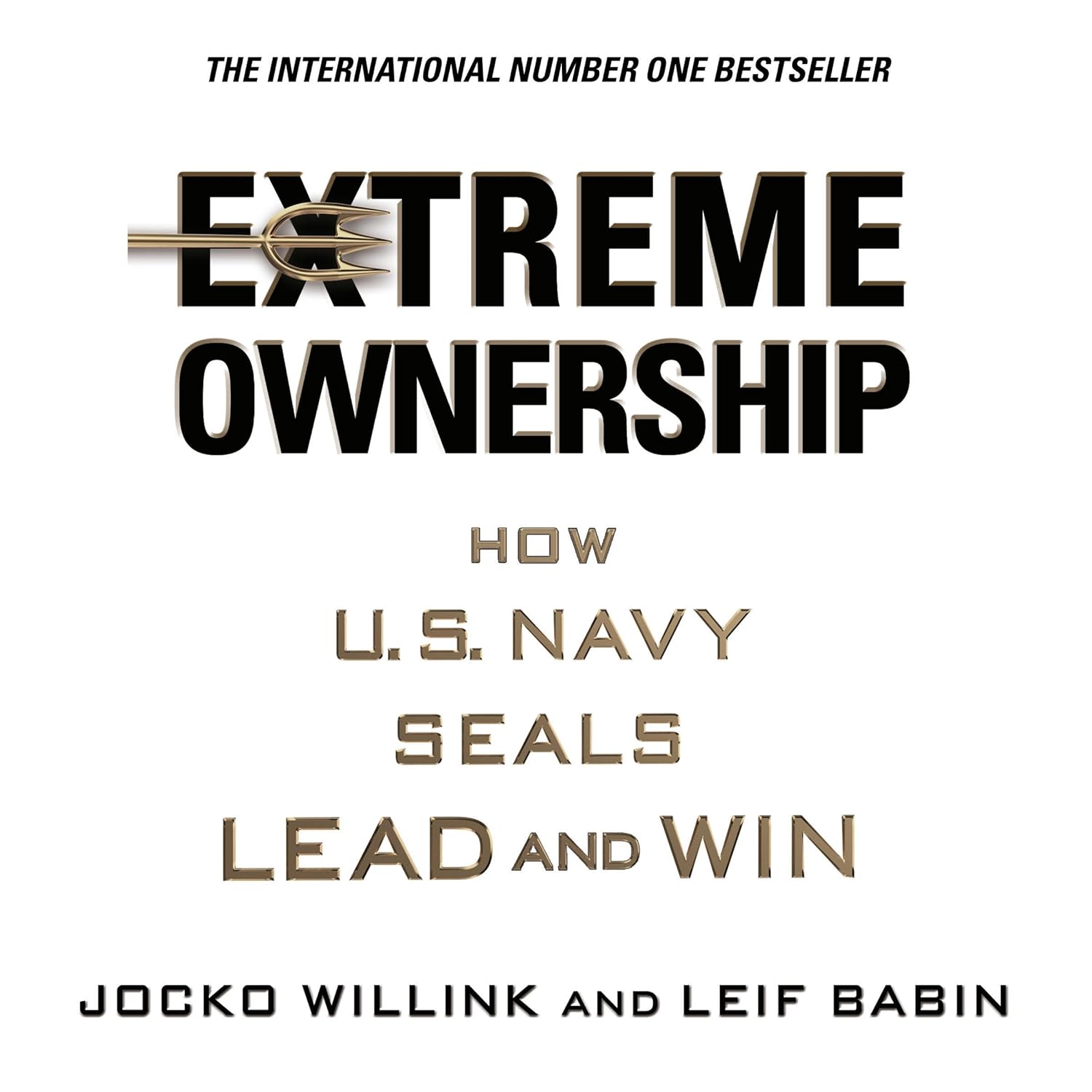
In the violent, insurgent-held city of Ramadi, Iraq, Jocko Willink and Leif Babin learned the hardest leadership lessons imaginable: where the stakes weren’t just quarterly profits, but human lives. As leaders of US Navy SEAL Team Three’s Task Unit Bruiser, they discovered that there are no bad teams, only bad leaders. Success or failure on the battlefield depends entirely on whether those in charge are willing to take total responsibility for everything in their world.
Moving from gripping combat accounts to high-stakes business consulting, Extreme Ownership details the mindset and principles that allow US Navy SEAL units to accomplish the impossible. It challenges leaders at every level to stop making excuses, stop blaming subordinates, and start owning every mistake and every triumph. It is a call to fulfil your ultimate purpose: to lead and win.
The Peter principle observes that in any hierarchy, every employee tends to rise to their level of incompetence. A great salesman is promoted to manager, where he fails because he lacks leadership skills. And there he stays, clogging the system.
Willink and Babin argue that the Incompetence Trap is actually a failure of ownership. The Peter principle thrives in cultures where leaders blame their incompetent team for poor results. Extreme Ownership breaks this cycle by asserting that if a subordinate doesn’t understand the mission or lacks the skills to execute, it is the leader’s fault. By taking total ownership, a leader forces themselves to either train the team to competency or fix the structural friction. This book shows that we can prevent the stagnation of the Peter principle by demanding constant, aggressive self-improvement and accountability.