Never attribute to malice that which is adequately explained by stupidity.
What is Hanlon’s razor?
Hanlon’s razor is the ultimate philosophical sedative for the modern world. Summarised by this merciful decree, it serves as a shield against the exhausting urge to believe in global conspiracies. While it’s tempting to believe that the airline lost your luggage as part of a targeted vendetta, Hanlon’s razor suggests a much duller reality: a tired baggage handler simply put your suitcase on the wrong belt. It is a reminder that the world isn’t generally out to get you; it’s just largely disorganised and prone to human error.
The razor (a philosophical tool used to “shave off” unlikely explanations) was named after Robert J. Hanlon, who submitted it to a book of jokes about Murphy’s Law in 1980. However, the sentiment is an ancient one, echoed by everyone from Goethe to Jane Austen. It describes a cognitive mercy, by assuming incompetence over evil, we save ourselves the mental energy of a fight and the emotional drain of resentment. In the professional world, it is the difference between a toxic office culture where everyone is sabotaging each other and a functional one where people simply acknowledge that someone forgot to hit “Save.”
To delve into the psychological machinery that makes us ignore this razor, one should turn to The Believing Brain by Michael Shermer. He explains how our ancestors evolved to see patterns and agency everywhere (like assuming a rustle in the grass was a predator), which is why we still struggle to see a bureaucratic error as anything other than a plot. For a more practical application in the world of high-stakes systems, Normal Accidents by Charles Perrow is a foundational text. Perrow argues that in complex modern systems, failure is baked in and inevitable, proving that when things go wrong, it’s usually the system’s design and not a villain’s master plan that’s to blame.
Sidebar
The psychology behind the paranoia
Why is Hanlon’s razor so hard to follow? It’s because of the Fundamental Attribution Error. This is a cognitive bias where we attribute other people’s mistakes to their character (“He’s a fool”) while attributing our own mistakes to our circumstances (“I was just tired”).
When a coworker misses a deadline, we assume they are lazy or malicious. When we miss a deadline, we blame the traffic and the broken printer. Hanlon’s razor forces us to extend the same situational grace to others that we naturally give to ourselves, effectively balancing the scales of social judgment.
Ultimately, Hanlon’s razor is a call for a more efficient kind of cynicism. It doesn’t ask us to believe that everyone is perfect; it just asks us to believe they aren’t nearly clever enough to pull off the elaborate schemes we imagine. On a Lex Nunc mug, it’s the perfect desk peace offering: a cynical yet strangely comforting reminder to take a breath before you send that angry “Reply All.”
-
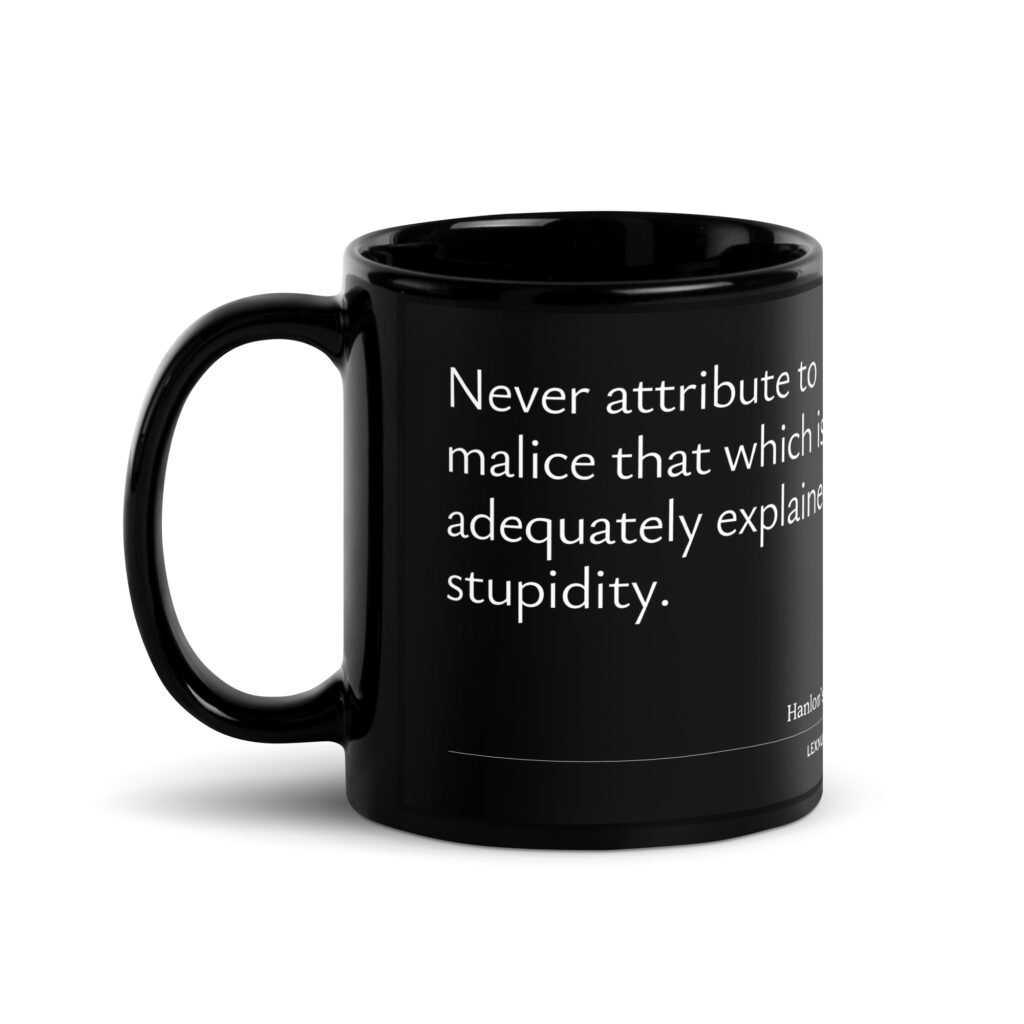
Hanlon’s razor black mug
Price range: £8.50 through £9.50 -
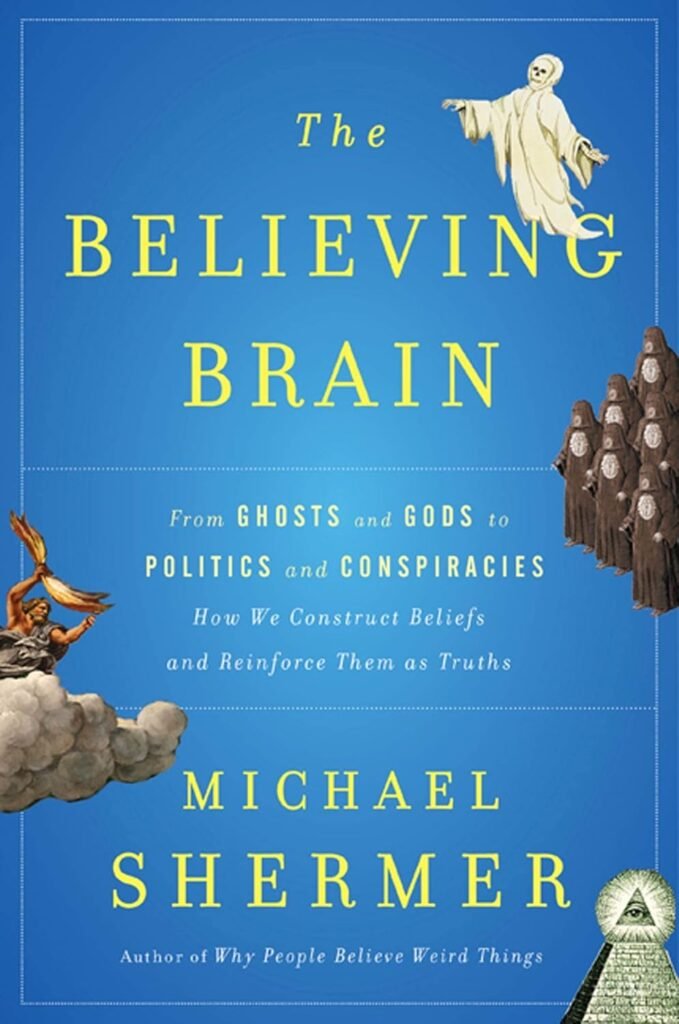
The Believing Brain
-
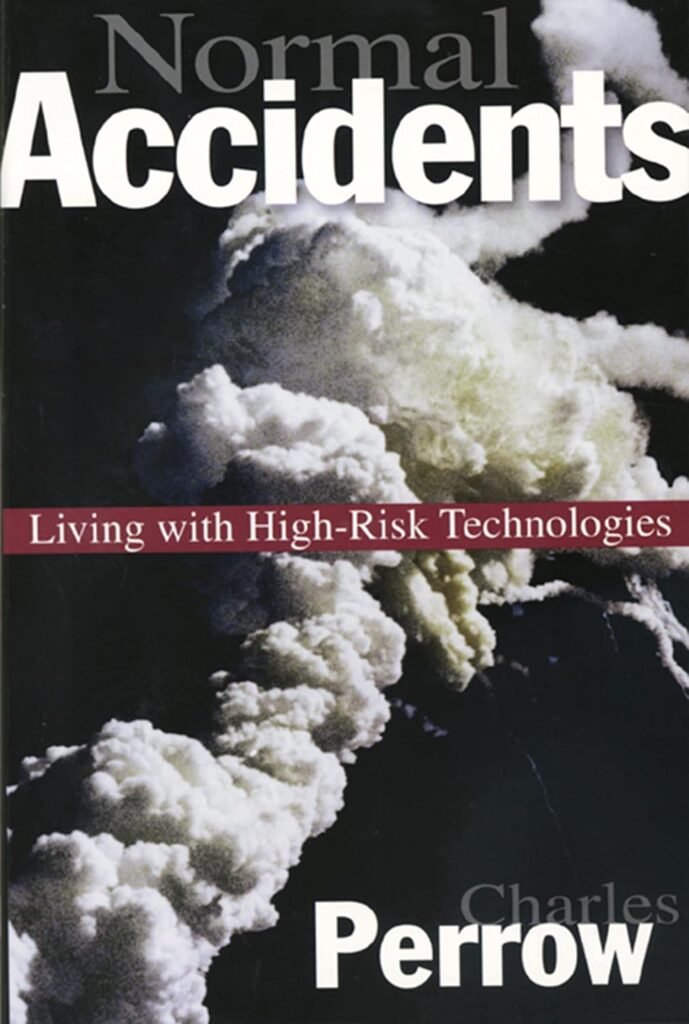
Normal Accidents