Description
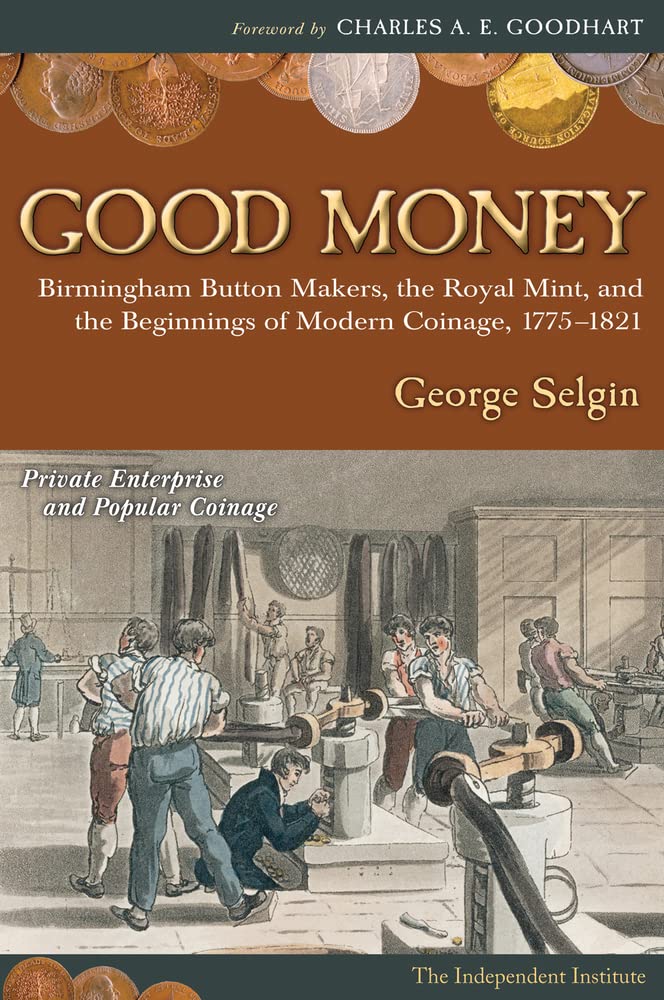
In the late 18th century, the Royal Mint was a textbook example of institutional failure. While the Industrial Revolution was demanding a fluid, functional currency to pay the workers of the world, the Crown was busy producing almost nothing. The few official coins in circulation were worn, clipped, and debased; classic “bad money” that the public was forced to use for lack of an alternative.
According to Gresham’s law, when a government artificially overvalues a degraded currency, people hoard the good stuff (pure gold or silver) and only spend the bad stuff. But Selgin’s Good Money reveals the radical inverse: what happens when the government fails to provide any money at all?
The answer was the “tradesman’s token.” Private manufacturers bypassed the Crown’s paralysed bureaucracy to mint their own high-quality copper coinage. These tokens weren’t just a placeholder, they were “good money” in its purest form — honest, stable, and widely accepted — proving that even a royal monopoly cannot stop the market from seeking a superior standard.
Good Money is the definitive historical case study of Gresham’s law being turned on its head. Usually, the “bad” government money wins because of legal tender laws. But in the 1780s, the Royal Mint’s failure was so total that the “good” private money actually drove out the “bad” (or non-existent) government coins.
Selgin demonstrates that currency is not a gift from the State, it is a tool for the people. From 18th-century copper to 21st-century digital assets, the struggle between the “Bad Money” of bureaucracy and the “Good Money” of the private sector remains the central drama of economic history.