Description
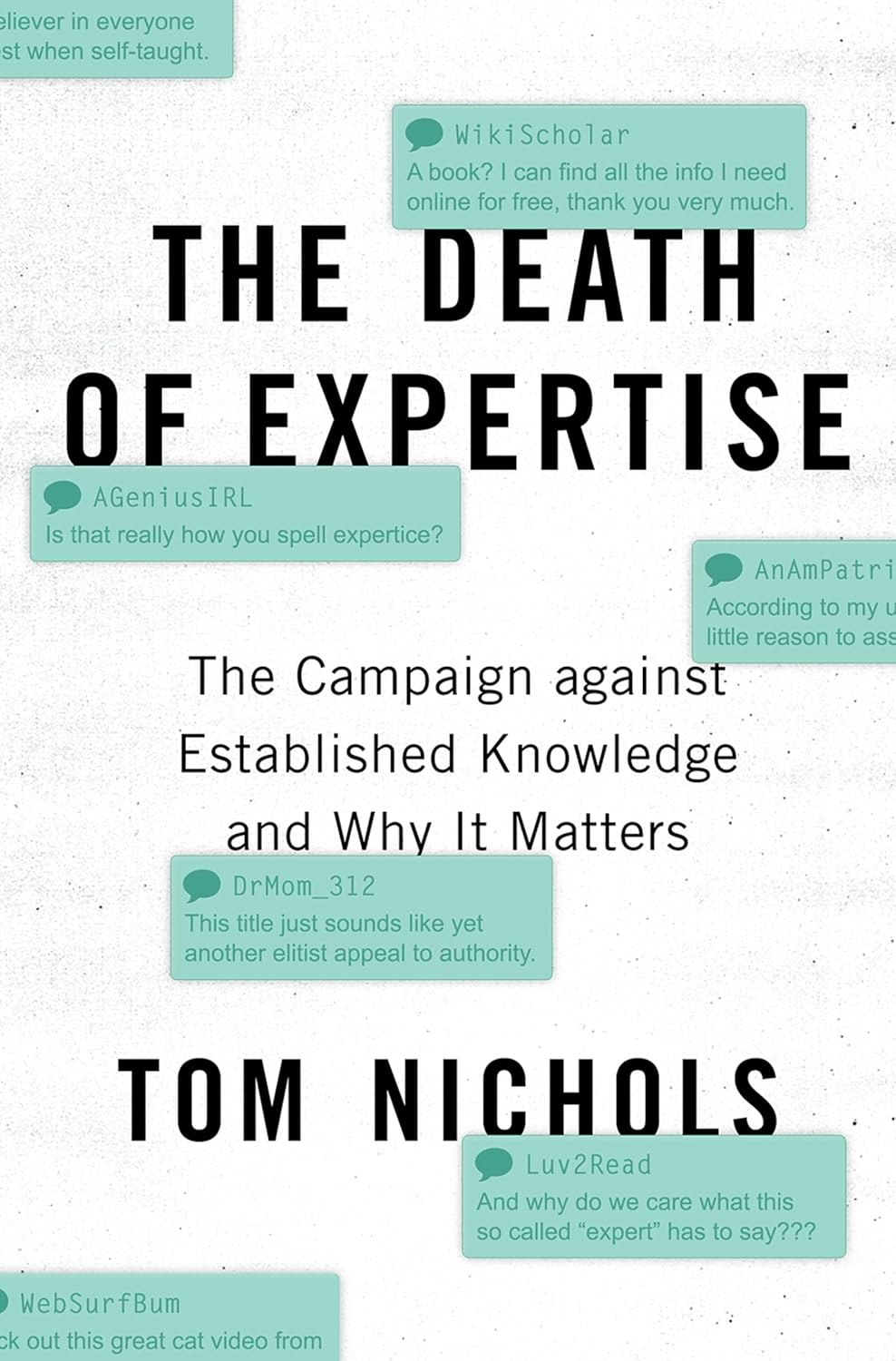
We have more information at our fingertips than any generation in human history, yet we have never been more hostile to actual knowledge. In The Death of Expertise, Tom Nichols explores the paradox of the Information Age: the same technology that democratised learning has also fuelled a surge in intellectual egalitarianism. Today, a quick trip through a search engine is often mistaken for a medical degree or a career in diplomacy.
Nichols shows how the internet, the customer satisfaction model of higher education, and the 24-hour news cycle have converged to create an environment where all voices — no matter how ridiculous — demand to be taken with equal seriousness. It is an army of ill-informed citizens denouncing the very intellectual achievements that keep society functioning. This is a critical assessment of how we lost the ability to have an informed debate and what it means for the future of democracy.
Nichols demonstrates that in the digital age, we have lost our ability to recognise Sturgeon’s law on what we read and see. Because the internet gives us access to everything, we have mistakenly assumed that everything — and everyone — is of equal value.
When ninety percent of everything is elevated to the same status as the ten percent of expert knowledge, the result is total cognitive noise. Nichols explains that when we treat the crap with the same reverence as the gold, expertise doesn’t just fade, it is actively hunted. This book is the definitive warning: if you can’t distinguish the ten percent that matters, you aren’t being “democratic.” You’re just being loud.