Work expands so as to fill the time available for its completion.
What is Parkinson’s law?
Parkinson’s law is the ultimate explanation for why your quick Saturday chore somehow takes until Sunday evening. Coined by C. Northcote Parkinson in 1955, it illustrates the phenomenon where, if you give yourself a week to write a two-page report, the task will miraculously grow in complexity, requiring days of research and formatting until the final hour. Conversely, if you have only twenty minutes before a flight, that same report will somehow get finished with ruthless efficiency.
Parkinson complemented his law with a second observation: that the number of workers within public administration tends to grow, regardless of the amount of work to be done.
Originally a satirical observation of the UK Civil Service, Parkinson noted that bureaucracy grows regardless of the amount of work to be done. He pointed out that administrators create work for each other to justify their own existence, leading to a pyramid of promotion where the number of employees increases by a steady percentage every year, even if the organisation’s output remains flat. In the modern world, this manifests as the endless meeting culture, where a thirty-minute discussion will always last exactly thirty minutes, usually because the participants feel obliged to use up every second of the calendar invite.
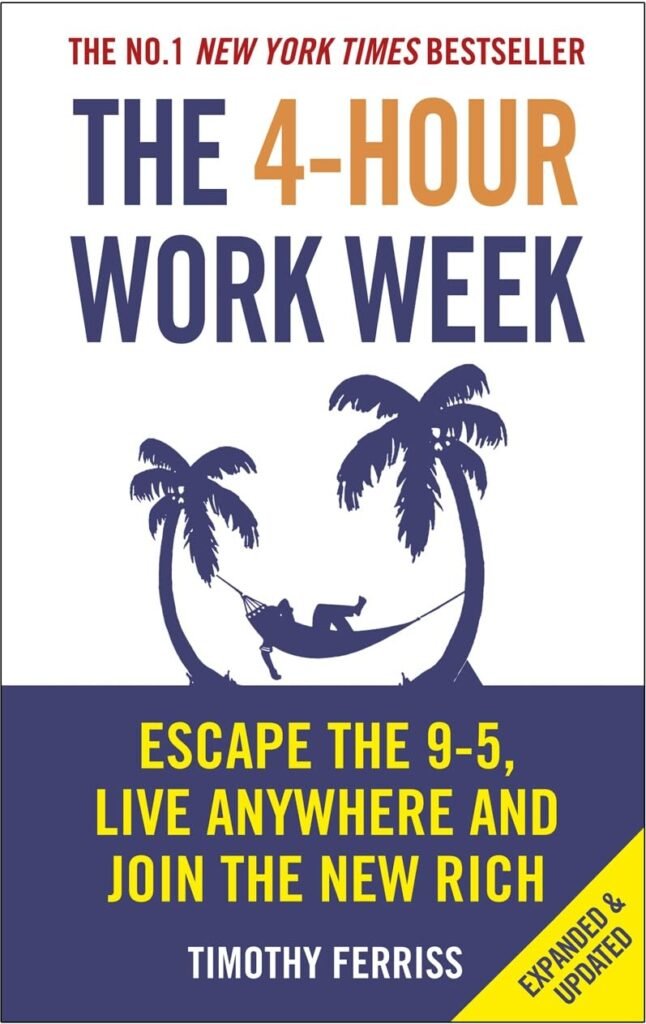
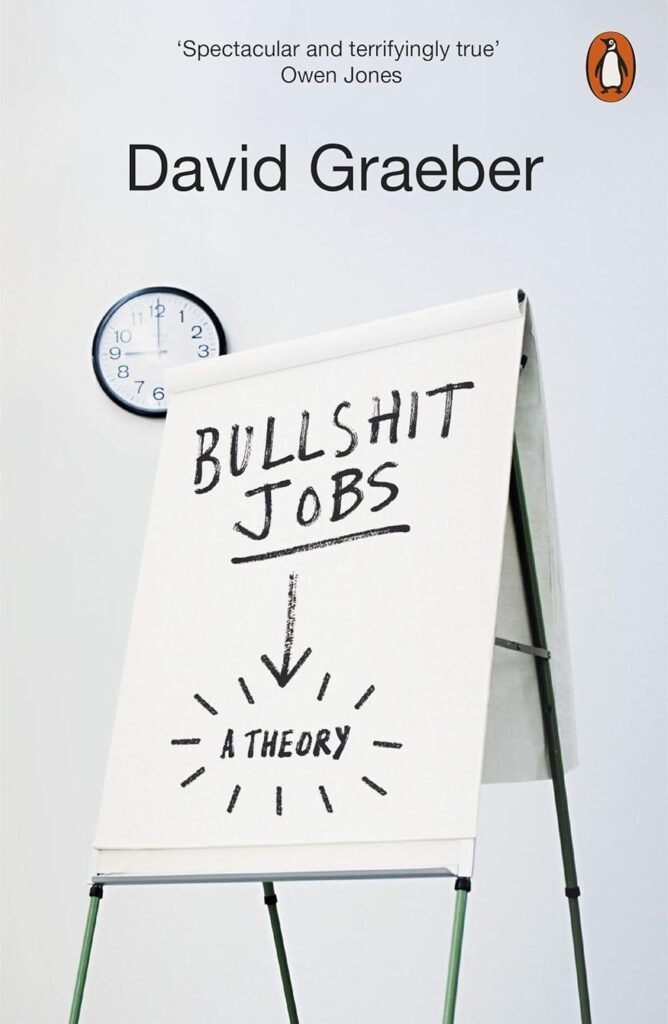
To master the art of fighting back against your own expanding schedule, The 4-Hour Workweek by Tim Ferriss is the modern manual. Ferriss champions the use of Parkinson’s law as a productivity weapon, suggesting that we should set artificial and aggressive deadlines to force ourselves to focus only on what is essential. For those interested in the institutional side of the trap, Bullshit Jobs by David Graeber provides a provocative and witty look at how modern society has created millions of roles that serve no purpose other than to fulfil the bureaucratic expansion Parkinson first warned us about.
A specific corollary within Parkinson’s writings is the Law of Triviality. He observed that a committee will spend a disproportionate amount of time on trivial issues while ignoring truly complex ones.
His classic example involved a committee approving plans for a nuclear power plant. They spent ten minutes on the multi-million dollar reactor (because it was too complex for anyone to understand) but spent two hours arguing over the materials for the bicycle shed (because everyone knows what a shed looks like and has an opinion on it). In any organisation, the bike-shed effect ensures that the most time is wasted on the things that matter the least.
Sidebar
Other corollaries
Parkinson’s original observation spawned a series of cynical thoughts that every modern professional knows by heart. These corollaries highlight the absurdity of the 9-to-5 mindset and the digital bloat of the 21st century.
The Stock-Sanford corollary:
If you wait until the last minute, it only takes a minute to do.
This is the ultimate justification for a procrastinator. It suggests that focus is merely a byproduct of terror. When the deadline is an hour away, the expanding work has no room left to grow, forcing it to collapse into its most efficient form.
Or the Asimov corollary:
In ten hours a day, you have time to fall twice as far behind your commitments as in five hours a day.
Coined by the legendary Isaac Asimov, this serves as a warning against the hustle culture trap. More time in the office doesn’t necessarily mean more output; it often just provides more room to start three new projects while finishing none of the old ones.
Or the digital corollary:
Data expands to fill the space available for storage.
A tech-centric spin on the law. Whether it’s your smartphone’s photo gallery or a corporate server, the clutter will always grow to meet the limits of your hard drive.
Ultimately, Parkinson’s Law is a reminder that “busy” is not the same as “productive.” It teaches us that the best way to get something done is often to give yourself less time to do it. On a Lex Nunc mug, this law serves as a cheeky warning to colleagues: if you give me an hour of your time, I’ll find a way to waste every single minute of it.